Home mold test kits can produce useful findings about mold spores or suspected surface growth when the method is used correctly. However, a technically accurate result can still be misleading if the test does not match the question being asked. Whether a kit is accurate depends on what it is designed to measure, how it is used, where and when the sample is collected, and whether it is answering the question you actually need answered.
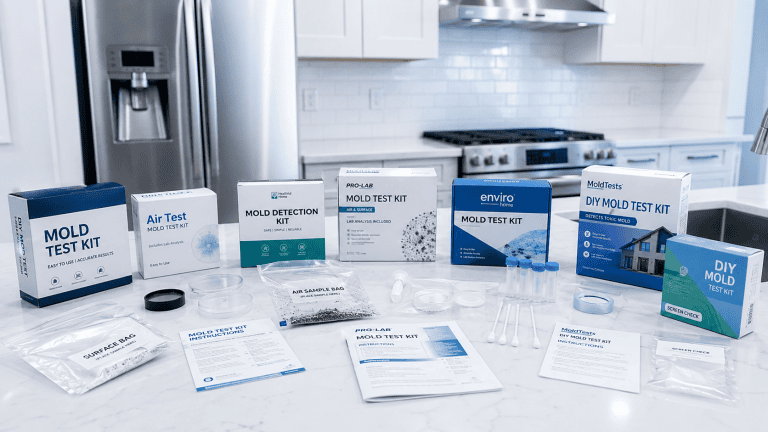
The most common home mold kits, such as petri dish, settling plate, swab, and tape lift tests, are usually designed to detect mold growth or mold spores. They are not designed to evaluate every mold-related concern, confirm remediation success, identify hidden moisture problems, or detect mycotoxin exposure.
Part of the confusion comes from incentives. Inspection companies may emphasize the limits of DIY testing, while kit manufacturers may emphasize convenience and reliability. The more useful answer is somewhere in the middle: home mold test kits can be useful, but only when the test type matches the question being asked. Whether home mold test kits are reliable ultimately depends on the collection method, laboratory analysis, sampling conditions, and how the result is interpreted.
- Whether a home mold test kit is accurate depends on whether the method matches the specific question being asked.
- Analytical accuracy is not the same as sampling representativeness, interpretive validity, or decision usefulness.
- Standard spore-based kits detect mold organisms, not mycotoxins, which are chemical compounds that require different analysis.
- Different test types sample different environmental domains, and a result from one domain does not describe another.
- A self collection kit can be a useful starting point for a clearly defined question, while complex or documentation-driven concerns call for an independent environmental professional.

The Five Questions That Determine Whether a Mold Test Is Useful
Before evaluating any mold test kit, it helps to ask five questions that determine whether a given test can answer the concern you are starting with.
1. What are you testing for? Biological mold organisms and chemical mycotoxins are different things. Spore tests evaluate biological particles. Mycotoxin tests evaluate chemical compounds. A test designed for one cannot answer questions about the other.
2. What pathway are you evaluating? Are you trying to understand whether something is present somewhere in the building, or whether it may be reaching the air you are actually inhaling? Presence and inhalation exposure are different questions and require different sampling approaches.
3. Where are you measuring it? Air, settled dust, a targeted surface, and the building structure itself each represent different environmental domains. A result from one domain does not describe conditions in another Ritacco, 2026a.
4. What timeframe does the sample represent? Some tests evaluate what is present in the air at a specific moment. Others evaluate what has accumulated over weeks or months. Current conditions and historical accumulation are not the same question.
5. How will the result be verified? Does the test you are choosing evaluate the same concern that prompted the investigation? A result is only useful if it can inform a decision: whether to investigate further, take corrective action, or confirm that a concern has been addressed.
These five questions come directly from the framework Respirare Labs uses to evaluate indoor environmental testing: Hazard, Pathway, Domain, Timing, and Verification. They apply to every test type in this post.
A Test Can Be Accurate and Still Mislead You
Before comparing specific testing methods, it helps to separate four concepts that are often treated as interchangeable but mean very different things.
Analytical accuracy refers to whether the laboratory correctly identified what was present in the submitted sample. A laboratory may accurately detect mold DNA in settled dust, mold spores in an air sample, mycotoxins in breathing-zone air, or mycotoxin residue on a targeted surface.
Sampling representativeness refers to whether the sample reflects the environmental condition you are trying to understand. A dust sample may accurately show what has accumulated over time, but it does not necessarily represent what is currently suspended in the breathing zone. Likewise, a surface sample may accurately describe one material without representing conditions throughout the home.
Interpretive validity refers to whether the result supports the conclusion being drawn from it. Detecting mold DNA or mycotoxins in settled dust does not automatically mean those same contaminants are currently airborne. Similarly, a low airborne result from one room and one sampling period does not rule out a concern elsewhere in the building or under different conditions.
Decision usefulness refers to whether the result helps determine what should happen next. A finding is most useful when it clarifies whether further investigation is needed, identifies the environmental domain of concern, helps guide corrective action, or supports an appropriate follow-up strategy.
A test can therefore be analytically accurate while still being misinterpreted or used to answer the wrong question. The real issue is not only whether the test detected something correctly, but whether the sample type, location, timing, and interpretation match the concern being investigated.
What Home Mold Test Kits Actually Measure
The first step to evaluating a kit's accuracy is understanding what it actually measures.
Many consumer home mold test kits evaluate biological mold indicators in the air or on targeted surfaces. Common examples include settling plates, tape lifts, and swab kits. Other home tests use laboratory methods to evaluate mold DNA in settled dust.
These tests answer a biology question: are mold organisms present? They can help identify whether mold spores or mold growth are present, but not why they are present, where the moisture source is, or whether the result represents current inhalation exposure. An appropriately selected and collected spore-based sample can identify mold spores or growth within the domain sampled. Whether the finding indicates an unusual indoor condition requires additional context, such as the sampling method, location, comparison data, and building conditions Bennett & Klich, 2003 Al Hallak et al., 2023.
What they are not designed to do is detect mycotoxins. Mycotoxins are chemical compounds produced by some molds under specific conditions. They are different from biological mold spores and are not identified or quantified through standard spore-based laboratory analysis. A spore test may report normal or low spore findings without answering whether airborne mycotoxins are present, because the analysis was not designed to measure them.
This matters because many homeowners searching "are home mold test kits accurate" are concerned about health effects associated with mold exposure. Mycotoxins are one category of compounds studied in connection with water-damaged buildings and potential exposure concerns. A test that does not measure mycotoxins cannot determine whether mycotoxins are present in the sampled environmental domain, regardless of how accurately it measures mold spores. That is an important limitation when the specific environmental question concerns mycotoxins rather than mold spores, mold growth, or dampness-related conditions.

Mold Test Kit Types Compared
Not all home mold test kits are measuring the same thing. Some collect particles from air, some sample a specific surface, some analyze settled dust, and some are not mold tests at all but broader inspection tools. The sample domain determines what question the result can and cannot answer.
The table above illustrates the central point of this post: different kit types answer different questions. Using one to answer a question it was not designed to address produces accurate measurements of the wrong thing.
Which Mold Test Matches Your Question?
Different tests answer different questions. Choosing the right test begins with identifying the question you are trying to answer.
The EPA notes that sampling is generally not needed when mold is visible. The more useful step is removing the mold and correcting the moisture source that allowed it to grow EPA, 2026.
When a DIY Mold Test Kit Can Be Useful
A DIY mold test kit can be useful when the question is clearly defined and the testing method is designed to answer it. However, not all home mold tests provide the same level of information. A basic consumer petri dish and a home test that uses a standardized collection method with professional laboratory analysis should not be treated as equivalent tools.
A DIY mold test kit may be a reasonable starting point when:
You have a specific question. The test should match what you are trying to evaluate, whether that is mold spores in the air, mold DNA and mycotoxins in settled dust, mycotoxins in breathing-zone air, or mycotoxin residue on a targeted surface.
The scope is straightforward. A single room, targeted surface, or clearly defined screening question may not require a full building investigation.
You understand what the sample represents. Air testing reflects airborne conditions during the sampling period. Dust testing reflects what has accumulated over time. Surface testing reflects the specific material or area sampled.
You are using the result as a starting point. A home mold test may help establish a baseline, determine whether further investigation is warranted, or guide the next testing decision.
The usefulness of a DIY mold test depends on more than the laboratory result. Sampling location, timing, room conditions, collection method, and interpretation all influence what the result can reasonably tell you.
A well-designed home test with professional laboratory analysis can provide useful information, but it should not be expected to locate hidden moisture, evaluate an entire building, determine the cause of symptoms, or replace formal post-remediation verification.
When a Professional Mold Assessment Is the Better Choice
A professional mold assessment is generally the better option when the concern extends beyond a clearly defined testing question or when the results will be used to guide major decisions.
Consider working with an independent environmental professional when:
The investigation is complex. Multiple rooms, HVAC pathways, recurring moisture, hidden contamination, or conflicting test results may require a building-wide investigation and a coordinated sampling strategy.
The source is unknown. Laboratory testing can identify what was present in a sample, but it does not necessarily explain where the contamination originated, why it is occurring, or how extensive the problem may be.
Legal, insurance, or remediation documentation is involved. Real-estate transactions, insurance claims, disputes, and formal remediation projects may require documented protocols, chain-of-custody procedures, and professional interpretation.
Post-remediation verification is needed. Confirming that remediation was successful should be based on a defined clearance protocol rather than a general consumer test or a single homeowner-collected sample.
The exposure question involves multiple domains. Concerns involving air, settled dust, targeted surfaces, recent remediation, or both mold and mycotoxins may require a testing plan that evaluates more than one environmental domain.
The results are difficult to interpret. A professional can review laboratory findings alongside moisture conditions, visible observations, building history, occupant activity, and results from other testing methods.
DIY testing and professional assessment are not competing approaches. They serve different levels of complexity. The right starting point depends on the question being asked, the condition of the building, and how the results will be used.
Independent environmental professionals in the Respirare Labs provider network are available through our provider locator.

The Mycotoxin Question Standard Mold Kits Cannot Answer
Standard home mold test kits do not test for mycotoxins. This is not a flaw in the kit design. Spore tests were not designed to detect mycotoxins, and they should not be expected to. But it means that if the underlying concern is mycotoxin exposure, a spore test cannot address that concern regardless of its accuracy.
Mycotoxins are chemical compounds produced by some molds, including Stachybotrys chartarum, Aspergillus, and Penicillium, under specific environmental conditions Bennett & Klich, 2003. Once produced, mycotoxins may become airborne in association with spores, fungal fragments, dust, and other particles. Studies have detected and quantified airborne mycotoxins in indoor environments using immunochemical and mass-spectrometry-based analytical methods Brasel et al., 2005 Derz & Elsinghorst, 2025.
Research has examined mycotoxins and their potential role in health concerns associated with damp or water-damaged buildings Pestka et al., 2008. Environmental testing cannot determine the cause of an individual symptom, but when mycotoxins are the specific environmental concern, a spore-only test does not evaluate that target.
Three mycotoxin-specific testing options are available for self collection or through an independent environmental professional:
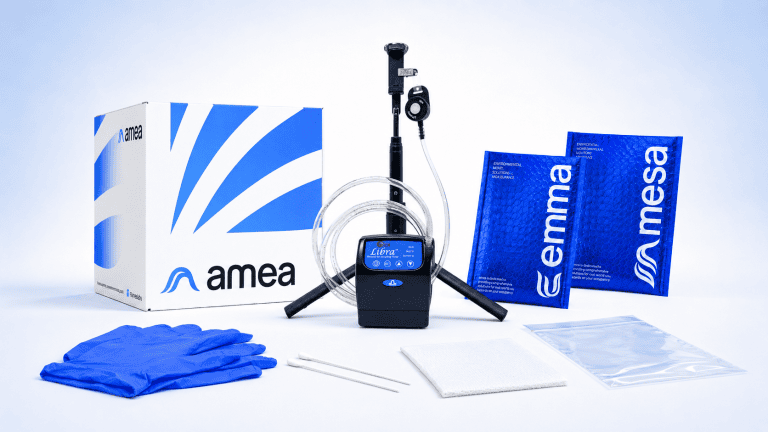
AMEA™ mycotoxin air test collects inhalable particles from breathing-zone air and uses mycotoxin-specific laboratory analysis to evaluate selected airborne mycotoxins during the sampling period.
MESA™ mycotoxin surface test evaluates mycotoxin residue on targeted surfaces and materials. It may be useful for investigating a specific surface or evaluating a targeted area after cleaning, material removal, or remediation.
EMMA™ mold and mycotoxin dust test evaluates mold markers and mycotoxins in settled dust. Unlike an ERMI-style test, which evaluates mold DNA only, EMMA adds information about mycotoxins present in the accumulated dust. Because dust accumulates over time, EMMA can provide a broader view of mold markers and mycotoxins that have collected in the sampled dust. It is not a measure of current breathing-zone conditions, but it can be a valuable starting point for understanding mold and mycotoxin accumulation in a space.
Together, these three tests evaluate three different environmental domains. The right one, or combination, depends on the specific question being asked. Learn more about the testing options at our home testing comparison page or take the short Mold Testing Quiz to identify the right starting point for your situation.
The Bottom Line on Home Mold Test Kit Accuracy
Asking whether home mold test kits are accurate is a bit like asking whether a thermometer is accurate for diagnosing an illness. The thermometer may be perfectly calibrated. It still cannot tell you what you need to know if fever is not the right thing to measure.
Home mold test kits can be accurate tools. The question is whether they are measuring the right thing for your concern, under the right conditions, in the right location, at the right time.
If the concern is mold spores in a specific area, a well-designed spore kit used correctly can provide useful information. If the concern is whether mycotoxins are present in the air you are breathing, a spore kit cannot answer that question. That question requires a test designed for it.
For related reading, see How Accurate Are Air Mold Tests? It Depends What You're Testing For, Is Mold Alive? Yes. Mycotoxins Are Not., and Where to Get Tested for Mold Exposure: Home vs. Medical Tests.
Find the test that matches your question
Air, dust, and surface tests measure different environmental conditions. Answer a few short questions to identify the testing approach that best matches your concern.
References
- Ritacco, M. (2026a). Physicochemical Divergence of Mycotoxin and Biological Indicators Across Airborne, Dust Reservoir, and Surface Analytical Domains in Indoor Environments. Respirare Labs Preprint Archive.
- Bennett, J. W., & Klich, M. (2003). Mycotoxins. Clinical Microbiology Reviews, 16(3), 497–516.
- Al Hallak, M., Verdier, T., Bertron, A., Roques, C., & Bailly, J.-D. (2023). Fungal contamination of building materials and the aerosolization of particles and toxins in indoor air and their associated risks to health: A review. Toxins, 15(3), 175.
- United States Environmental Protection Agency. (2026). Mold testing or sampling.
- Brasel, T. L., Martin, J. M., Carriker, C. G., Wilson, S. C., & Straus, D. C. (2005). Detection of airborne Stachybotrys chartarum macrocyclic trichothecene mycotoxins in the indoor environment. Applied and Environmental Microbiology, 71(11), 7376–7388.
- Derz, W., & Elsinghorst, P. W. (2025). From mold to mycotoxins: an LC–MS/MS method for quantifying airborne mycotoxins in indoor environments. Analytical and Bioanalytical Chemistry, 417, 4637–4648.
- Pestka, J. J., Yike, I., Dearborn, D. G., Ward, M. D. W., & Harkema, J. R. (2008). Stachybotrys chartarum, trichothecene mycotoxins, and damp building-related illness: new insights into a public health enigma. Toxicological Sciences, 104(1), 4–26.