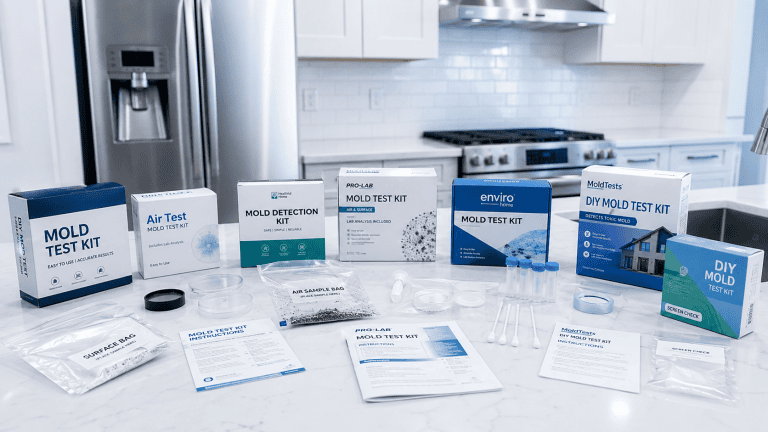
The best mycotoxin test depends on how much you already know about the concern. For most homeowners seeking a broad first look at possible mold and mycotoxin issues throughout the home, EMMA™ is the strongest starting screen. It is a mold and mycotoxin dust test that evaluates selected mold markers and environmental mycotoxins in settled dust, providing two categories of information from one sample.
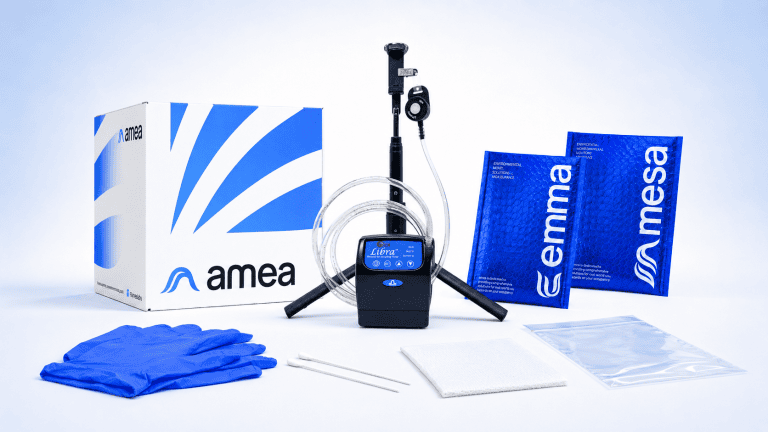
AMEA™ answers a more inhalation-relevant question. It evaluates selected mycotoxins collected from breathing-zone air during a defined sampling period, making it the most directly aligned option when the primary concern is airborne mycotoxins in an occupied area.
MESA™ is designed for a localized question involving one surface, material, HVAC component, piece of furniture, or belonging.
The right starting point is not determined by which product is universally superior. It depends on whether you need a broad home screen based on settled dust, an inhalation-focused air assessment, or a targeted surface result. Air, settled dust, and targeted surfaces represent different environmental domains and should not be interpreted as interchangeable measurements Ritacco, 2026a.
Key Takeaways
- The best mycotoxin test depends on the question, not on which product is universally superior.
- EMMA is the strongest starting screen when the concern is broad or the main location is unknown.
- AMEA™ is the most directly aligned option when you want to know whether airborne mycotoxins may be present in the air you are breathing.
- MESA™ is the most targeted option when the concern involves a specific surface or material.
- No single test establishes the condition of an entire home or proves a concern has been fully resolved.
Not sure where to start? Choose EMMA™ for a broad settled-dust screen, AMEA™ for breathing-zone air, and MESA™ for a specific surface or material.

What Is the Best Mycotoxin Test for a Home?
EMMA is designed for a broad settled-dust screen, AMEA for breathing-zone air, and MESA for a specific surface or material. The best starting point depends on the question you need answered:
EMMA™
Broad home starting screen
Selected mold markers and environmental mycotoxins in settled dust
You want a broad first look and do not yet know which pathway or location requires targeted follow-up
Does not directly measure breathing-zone air, identify the source, or represent every room equally
AMEA™
Inhalation-relevant air assessment
Selected airborne mycotoxins collected from breathing-zone air during a defined sampling period
You want to know whether airborne mycotoxins may be present in the air you are breathing
One sample represents one location, sampling period, and set of indoor conditions
MESA™
Targeted surface assessment
Mycotoxin residue collected from a selected surface, material, or belonging
The concern is tied to one specific item, surface, or location
Does not represent whole-home air or settled dust
Professional assessment
Building investigation
Moisture sources, visible growth, hidden risks, HVAC involvement, and sampling strategy
Visible mold, recurring moisture, hidden contamination, formal documentation, or a complex investigation is involved
Laboratory sampling is separate unless included
EMMA is the strongest starting screen when the concern is broad or undefined. AMEA™ is the most directly aligned option when the concern is whether mycotoxins may be present in the air occupants are breathing. MESA is the most targeted option when the concern involves a specific surface or material.
For a broader overview of testing approaches, see our comparison of mold and mycotoxin testing methods and the Respirare Labs Testing Framework.
Best Starting Whole-Home Screen: EMMA™
Within the Respirare Labs testing framework, EMMA is generally the strongest starting option for homeowners seeking a broad home screen based on settled dust, particularly when they do not yet know which environmental pathway or location deserves more targeted investigation. It analyzes settled dust for selected mold markers and environmental mycotoxins, providing both mold-marker and mycotoxin information from the same sample RealTime Laboratories, n.d..
EMMA™ is generally the strongest starting screen when the concern is broad, the main location is unknown, or you want both mold-marker and mycotoxin information from one dust sample.

Because settled dust accumulates material over time, EMMA provides a broad dust-based screening perspective. AMEA™ answers a different and more inhalation-focused question by directly evaluating mycotoxins collected from breathing-zone air. This makes EMMA useful for identifying whether the submitted dust contains mold or mycotoxin findings that may help guide the next investigation step.
EMMA is also a strong alternative for homeowners considering ERMI or HERTSMI-2. ERMI uses selected mold-DNA measurements to calculate a relative moldiness index developed by EPA researchers; it was designed as a research tool and EPA does not recommend it for routine public use in homes EPA, 2025. HERTSMI-2 uses a narrower mold-DNA scoring approach. Neither directly measures environmental mycotoxins. EMMA evaluates selected mold markers and adds mycotoxin analysis from the submitted dust sample, making it a broader option when both categories of information are desired.
EMMA may be the best place to start when:
- You want a broad home screen based on settled dust
- You are unsure where the main concern is located
- You want mold and mycotoxin information from one dust sample
- You are considering an ERMI-style or HERTSMI-2 test
- You want a screening result that may guide more targeted follow-up
- Your home has adequate representative settled dust
EMMA may not be the best starting point when:
- Your main question already concerns breathing-zone air
- The home was recently cleaned or has little representative settled dust
- The concern is tied to one specific surface or item
- Visible mold or an active moisture problem already requires action
- Immediate formal post-remediation verification is needed
The result reflects the submitted dust sample and does not directly measure current breathing-zone conditions, identify the source of moisture, or confirm that the entire home is safe.
Learn more about EMMA™ or order the EMMA™ dust test kit.
Best for Breathing-Zone Air: AMEA™
AMEA™ is the most directly aligned environmental test when the concern is whether airborne mycotoxins may be present in the air occupants are breathing. It actively samples a measured volume of air from the breathing zone and analyzes the collected material for selected mycotoxins using ELISA.

Peer-reviewed research has demonstrated that airborne macrocyclic trichothecene mycotoxins can be collected from mold-contaminated indoor environments and analyzed using a mycotoxin-specific ELISA Brasel et al., 2005. That study supports the broader scientific basis for airborne mycotoxin collection and ELISA analysis, but it did not evaluate the AMEA system or its specific sampling protocol.
This is fundamentally different from dust screening. EMMA evaluates what has accumulated in settled dust over time. AMEA evaluates what was collected from the air during a defined sampling period under specific room conditions. That makes AMEA the more directly aligned test when the homeowner's primary question is whether selected mycotoxins are present in breathing-zone air in a particular occupied area.
AMEA™ is the most directly aligned option when the question concerns airborne mycotoxins in breathing-zone air during the sampling period.
AMEA™ may be the better starting option when the primary concern is inhalation, when the home has little representative settled dust, or when breathing-zone air needs to be evaluated in a defined occupied area.
AMEA™ may be the best place to start when:
- You want to know whether airborne mycotoxins may be present in the air you are breathing
- Inhalation is the primary concern
- You want to evaluate breathing-zone air in a specific room or occupied area
- The home has little representative settled dust
- You want to compare breathing-zone air findings across controlled sampling events
AMEA does not tell you:
- What has accumulated in settled dust throughout the home
- Which hidden material or moisture source produced a finding
- What is present in rooms that were not sampled
- Whether a specific surface contains residue
- Whether an individual symptom was caused by the environment
Among the three options, AMEA™ is the most directly aligned with inhalation concerns because it evaluates mycotoxins collected from breathing-zone air rather than accumulated dust or one selected surface.
Learn more about AMEA™ or order the AMEA™ air test kit.
Best for a Specific Surface or Material: MESA™
MESA evaluates mycotoxin residue collected from a specific surface, material, or belonging. It is the most targeted option when the question is localized rather than whole-home or airborne.
MESA may be appropriate for flooring, furniture, HVAC components, clothing, contents, walls, or other selected materials. Its strength is precision: the result applies to the exact area or item sampled. A MESA result should be interpreted alongside the material history, cleaning conditions, and broader building context.
MESA may be the best place to start when:
- One surface or material is the primary concern
- Belongings or contents need targeted evaluation
- An HVAC component or specific area is under investigation
- You are making a localized cleaning or material-handling decision
MESA does not tell you:
- What is present throughout the home
- What is currently airborne
- What has accumulated throughout the dust reservoir
- Whether a hidden moisture source remains active
Learn more about MESA™ or order the MESA™ surface test kit.
EMMA, AMEA, and MESA Compared
Primary domain
Settled dust
Breathing-zone air
Targeted surface
Primary role
Broad home starting screen
Inhalation-relevant air assessment
Localized surface assessment
Evaluates mold markers
Yes
No
No
Evaluates mycotoxins
Yes
Yes
Yes
Reflects accumulated material over time
Yes
No
Only on the sampled surface
Directly evaluates breathing-zone air
No
Yes
No
Evaluates one selected surface or item
No
No
Yes
Requires representative settled dust
Yes
No
No
Useful in a recently cleaned home
May be limited
Yes
Yes, if the target is appropriate
Locates the moisture source
No
No
No
Represents every room
No
No
No
Proves health causation
No
No
No
Formal post-remediation verification by itself
No
No
No
Which Mycotoxin Test Should You Start With?
I want a broad first look at possible mold and mycotoxin concerns throughout the home
EMMA™
I do not yet know which room, pathway, or surface deserves targeted investigation
EMMA™
I was considering ERMI or HERTSMI-2 but also want mycotoxin information
EMMA™
I want to know whether airborne mycotoxins may be present in the air I am breathing
AMEA™
The home has very little representative settled dust
AMEA™
My concern is tied to a specific surface, belonging, or material
MESA™
I can see mold or have an active moisture problem
Address the moisture source; consider a professional assessment
I need to locate the source or understand the full extent
Independent environmental professional
I need formal post-remediation verification
Defined professional protocol matched to the original remediation scope
Not sure which test fits your specific situation? Take the Mold Testing Quiz to get a matched recommendation in a few minutes.
When Follow-Up Testing May Be Useful
More testing is not automatically better. Each sample should answer a distinct question. Here is when combining tests may be useful.
AMEA™ as the first test may be appropriate when the primary concern is whether airborne mycotoxins may be present in the air occupants are breathing. EMMA does not need to precede AMEA when the question is already inhalation-focused.
EMMA followed by AMEA may be useful when mycotoxins are identified in dust and the remaining question concerns breathing-zone air, or when a specific occupied area needs inhalation-focused evaluation following a broad dust screen.
EMMA followed by MESA may be useful when EMMA identifies a concern and a particular material or area becomes the focus, such as HVAC components, furniture, belongings, or specific building surfaces.
EMMA followed by professional assessment may be useful when the source is unknown, moisture or hidden growth is suspected, multiple areas may be involved, or results require a building-level investigation.
All three together may be appropriate when each domain answers a separate question and informs a distinct decision. Do not describe any combination as a complete whole-home safety assessment.
Environmental Testing vs. Urine and Biomarker Testing
Some people searching for the best mycotoxin test are trying to evaluate the home, while others are trying to understand what may be present in the body. These are related but different questions.
Environmental testing evaluates a defined part of the home. EMMA analyzes settled dust, AMEA analyzes material collected from breathing-zone air, and MESA analyzes a selected surface or material. These tests can help determine whether selected mycotoxins are present in the submitted environmental sample, but they do not diagnose illness or determine an individual's absorbed dose.
Urine and other biomarker tests evaluate a person's internal biological sample. They may provide information about detected mycotoxins, metabolites, or related biomarkers, depending on the test. However, a biomarker result generally cannot determine the exposure source by itself. Mycotoxins may be encountered through food as well as indoor, occupational, and other environmental pathways, so a urine or biomarker result cannot independently establish that exposure came from a particular home.
Environmental and biomarker testing address different questions and should not be treated as substitutes for one another. A qualified healthcare provider is the appropriate resource for symptoms and medical testing decisions.
When to Work With an Environmental Professional
Visible mold usually does not need testing before removal. Testing is more useful after cleaning or remediation when it is part of a defined plan to evaluate whether the work was effective.
A professional assessment is the appropriate starting point when:
- Visible mold is present in the home
- Active or recurring moisture is occurring
- Hidden contamination is suspected inside walls, under flooring, or in HVAC systems
- Multiple rooms or the HVAC system may be involved
- The building is involved in legal, insurance, or real-estate matters
- Formal post-remediation verification is required
- Previous results conflict or are difficult to interpret
- Source identification is needed rather than environmental screening alone
When visible mold growth is already present, additional sampling is usually unnecessary unless the result would change a specific decision. The priority is to correct the moisture source and clean or remove affected materials. Hidden, extensive, recurring, or HVAC-related concerns may warrant assessment by an experienced professional EPA, 2026. Independent environmental professionals in the Respirare Labs provider network are available through our provider locator.
Frequently Asked Questions
What is the best mycotoxin test for a home?
Is EMMA better than AMEA™?
Is EMMA better than ERMI or HERTSMI-2?
Does AMEA™ measure current exposure?
Can MESA™ evaluate belongings?
Can one test confirm that an entire home is safe?
The Bottom Line: Match the Test to the Question
For most homeowners who want a broad first look at possible mold and mycotoxin concerns throughout the home, EMMA is the best starting screen. It evaluates selected mold markers and environmental mycotoxins in settled dust and can help determine whether more targeted investigation is warranted.
When the primary question concerns airborne mycotoxins in the breathing zone, AMEA is the more directly aligned starting point. It evaluates selected mycotoxins collected from breathing-zone air during a defined sampling period, providing information that dust and surface tests cannot.
Choose MESA when the concern is tied to a particular surface, material, or belonging. Start with an independent environmental professional when visible mold, recurring moisture, hidden contamination, HVAC involvement, or formal post-remediation verification is involved.
The best test is not simply the broadest test or the most targeted test. It is the test that matches the decision you need to make.
For related reading, see How Accurate Are Air Mold Tests? It Depends What You're Testing For, Are Home Mold Test Kits Accurate?, and Where to Get Tested for Mold Exposure: Home vs. Medical Tests.
References
- Brasel, T. L., Martin, J. M., Carriker, C. G., Wilson, S. C., & Straus, D. C. (2005). Detection of airborne Stachybotrys chartarum macrocyclic trichothecene mycotoxins in the indoor environment. Applied and Environmental Microbiology, 71(11), 7376–7388.
- RealTime Laboratories. (n.d.). Environmental Mold and Mycotoxin Assessment (EMMA). Retrieved July 2026.
- Ritacco, M. (2026a). Physicochemical Divergence of Mycotoxin and Biological Indicators Across Airborne, Dust Reservoir, and Surface Analytical Domains in Indoor Environments. Respirare Labs Preprint Archive.
- United States Environmental Protection Agency. (2025). Should I test or sample for mold in my home using the Environmental Relative Moldiness Index, or ERMI?
- United States Environmental Protection Agency. (2026). Is sampling/testing for mold necessary?
Disclosure: Respirare Labs offers EMMA™, AMEA™, and MESA™ environmental testing services. AMEA™ and MESA™ are Respirare Labs methods. The Ritacco citation above is a Respirare Labs preprint that has not undergone independent peer review. Product recommendations in this article reflect the Respirare Labs objective-based testing framework.