A chemical contaminant in a home, such as mycotoxins, can generally be addressed in two ways: chemically change it or physically remove it. Many products marketed for mycotoxin cleanup focus on the first approach, using claims like destroy, neutralize, denature, or deactivate. But in indoor environmental cleanup, the foundation is usually the second approach: remove contaminated sources, remove contaminated dust and residues, reduce airborne particles, and verify that conditions have improved.
Mycotoxins are toxic compounds produced by certain molds, and they may persist in an indoor environment after visible mold has been removed. They can be present on materials, surfaces, settled particles, and airborne particles that people may breathe. That is why mycotoxin cleanup should not be treated as a simple “spray and solve” problem. This article explains why removal matters, how mycotoxins can be reduced indoors, and how testing can help confirm whether the environment has improved.
Key Takeaways
- Mycotoxins are stable chemical compounds, not living organisms, so cleanup depends on physical removal rather than chemical treatment.
- Correcting the moisture source comes first, because removal work cannot hold while the mold producing mycotoxins is still active.
- Mycotoxins can be present across materials, dust, surfaces, and airborne particles, so removal has to address every domain.
- Testing before and after the work defines the scope of removal and confirms whether conditions have improved.
- Adding another reactive chemical risks irritation and unverified results, which matters most in homes where occupants are already sensitive.

Removal vs. Destruction in Chemical Contamination
Many chemical contamination problems come down to two basic goals: change the contaminant or remove it from the environment. Destruction means chemically altering the compound so it is no longer present in its original form. Removal means taking contaminated materials, dust, residues, or particles out of the indoor environment. In a home, those two paths are not equally practical or equally verifiable.
Destruction is usually the harder path. It depends on the right chemistry, the right contact time, the right concentration, and the right environmental conditions. Those conditions may be difficult, unsafe, or unrealistic to reproduce throughout an occupied home. And even if a treatment changes a compound, that is not the same as proving the contamination has been removed or made harmless.
Changing a mycotoxin into another compound is not the same as removing the contamination. The altered compound may still be toxic, or it may create byproducts that require their own safety evaluation, which raises the question of what the mycotoxin was changed into and how that was verified.
Removal is more practical because it focuses on what can be identified, cleaned, captured, or taken out of the environment. Contaminated materials can be removed. Dust and residues can be cleaned. Airborne particles can be reduced through filtration, ventilation, and source control. Then the environment can be checked again.
That loop is the foundation of credible environmental cleanup: test, remove what is contaminated, and test again. For a deeper look at why destroying mycotoxins is not as simple as many product claims suggest, see our article on what kills mycotoxins.
What Other Industries Teach Us About Chemical Contamination
Mycotoxin contamination is not unique to homes. Food safety, agriculture, and environmental cleanup industries have dealt with stable chemical contaminants for decades, and their response reveals a consistent pattern: prevention, source control, removal, disposal, and verification.
The food and feed industry has one of the strongest possible incentives to find an easy fix. Mycotoxins are widely recognized as a major agricultural and food-safety problem, affecting a significant portion of crops worldwide each year and creating major economic losses.
An industry facing major losses from mycotoxin contamination still relies on prevention, rejection, and removal rather than in-place neutralization. If a cheap, safe, and reliable spray-on treatment existed, the food and feed sector would have every reason to use it. FAO, 2001 Codex Alimentarius, 2014
The same logic applies to other stable indoor hazards. Asbestos is managed through containment, professional removal, and disposal, not by neutralizing fibers where they sit EPA, Asbestos. Methamphetamine residue is treated as a chemical contamination problem requiring decontamination, removal, and verification, not ordinary household cleaning EPA, Meth and Fentanyl Cleanup ATSDR, 2005.
Across domains where contaminants are persistent, chemically stable, or difficult to safely break down, established practice tends to converge on the same principle: remove the contaminated material, reduce the reservoir, and verify the result.
Why Mycotoxin Removal Is the Right Approach
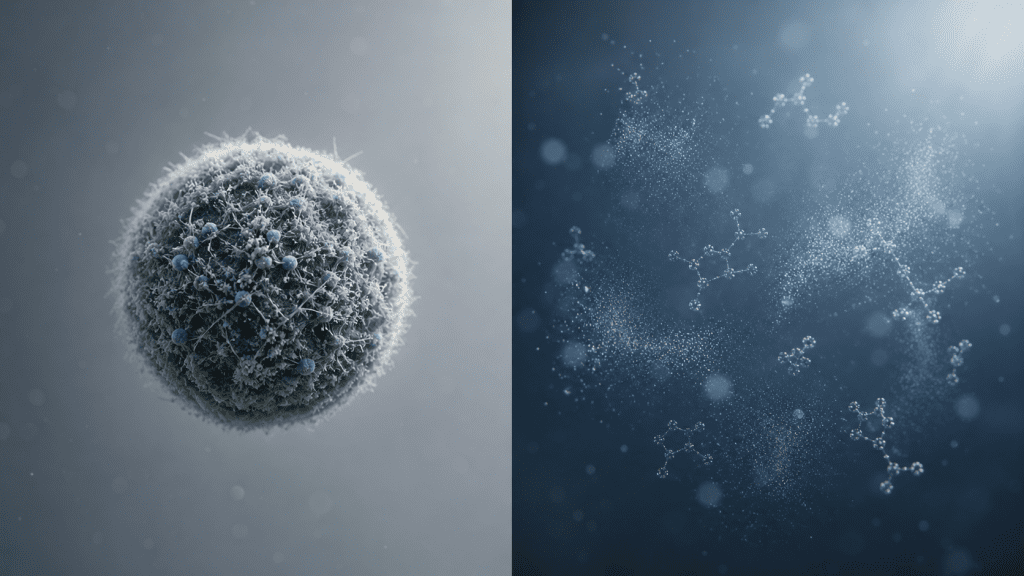
Mycotoxins fit this removal-first model because of how they behave indoors. They are stable chemical compounds, not living organisms, produced by certain molds during growth.
Removing mold can stop new mycotoxin production, but it does not remove what has already been released.
Once produced, those compounds can remain in the environment whether or not the mold that made them is still active. They also do not always stay where they were produced. Mycotoxins can attach to fine particles, fragments, and dust. In either form, they can move through a home with ordinary air movement, HVAC activity, cleaning, and occupant movement. They may be present on contaminated materials, deposited on surfaces, accumulated in settled dust, or carried on airborne particles in the breathing zone where exposure can occur Pestka et al., 2008.
That is why mycotoxin cleanup should focus on reducing contamination in the indoor environment, not adding another chemical treatment without proving what remains afterward.
Why Moisture Control Comes Before Mycotoxin Removal
You cannot reliably resolve a mycotoxin problem while the mold producing them is still active. Mold growth is driven by moisture, whether from a plumbing leak, poor ventilation, water intrusion, or chronically elevated humidity.
Before mycotoxins can be reduced, the conditions that allow mold to keep producing them have to be stopped.
Until that source is corrected, removal work may be undone in the background as growth continues. There is another reason moisture comes first. Some molds may change or increase mycotoxin production when stressed by environmental conditions, and active growth can be disturbed during cleaning, demolition, or remediation. If the conditions supporting growth are still present, disturbing contaminated materials may add to the problem you are trying to reduce. Once the growth conditions are controlled, the focus can shift to removing contaminated materials, dust, residues, and airborne particles from the affected environment.

Mycotoxin Testing Defines the Scope of Removal
Visible mold, musty odors, and a history of water damage can point to a mold problem. But they do not tell you whether mycotoxins are present, where they are concentrated, or how far they may have spread. Mycotoxins are not visible, and they require testing designed to detect them specifically.
That testing should match the way mycotoxins behave indoors. Air testing and surface testing evaluate two different domains, and the distinction matters for removal.
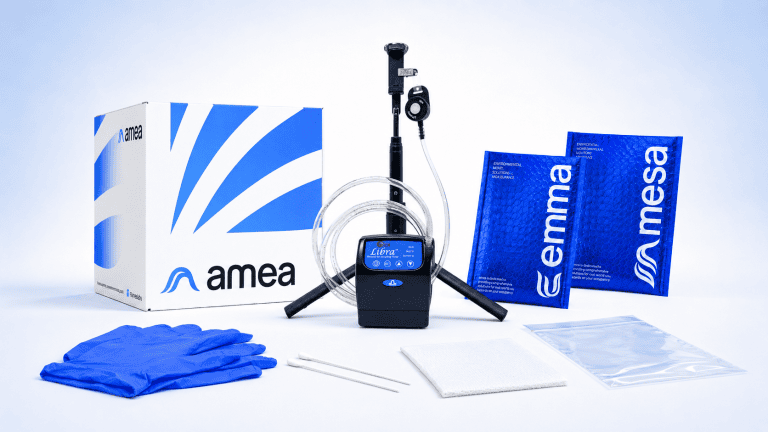
AMEA™ Air Test
Evaluates airborne mycotoxins in the breathing zone
Helps assess airborne exposure and what may be moving through the indoor environment
MESA™ Surface Test
Evaluates targeted surfaces, materials, objects, or areas
Helps identify where contamination may remain on surfaces or materials
Together, these results help define the boundary of the problem: what areas are affected, what materials may need attention, and what removal has to cover. Without testing, removal becomes guesswork. A visible patch of mold may not represent the full affected area, and a clean-looking room may still have contamination on surfaces or particles in the air. Testing before removal helps turn an invisible contamination problem into a defined cleanup scope.
Respirare Labs’ AMEA™ Mycotoxin Air Test and MESA™ Mycotoxin Surface Test are designed to evaluate these two domains together: airborne exposure in the breathing zone and targeted surface contamination in the indoor environment.
Mycotoxins Must Be Removed Across Multiple Domains
Once the moisture source is corrected and testing has defined the scope, removal becomes the central goal. Mycotoxins may be associated with contaminated materials, settled dust, surface residues, and airborne particles. That means the cleanup scope cannot be limited to the visible mold source alone.
Porous materials can hold contamination beyond the surface. Dust and surface residues can act as reservoirs that redistribute with airflow, cleaning, HVAC operation, and normal activity. Airborne particles matter because they represent the breathing zone where exposure may occur.
The key point is simple. Mycotoxin removal has to address the domains where contamination exists: materials, dust, surfaces, and air. That is why the scope should be guided by testing that can be performed both before and after remediation.
Dust testing has limits for post-remediation verification. Proper cleaning is intended to remove settled dust, leaving little consistent material to sample, so air and surface testing are often better suited for before-and-after comparison.
Why Adding More Chemicals Is Usually the Wrong Instinct
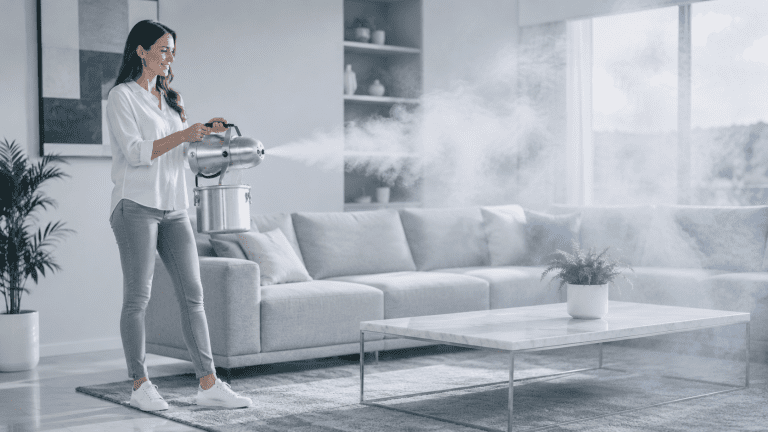
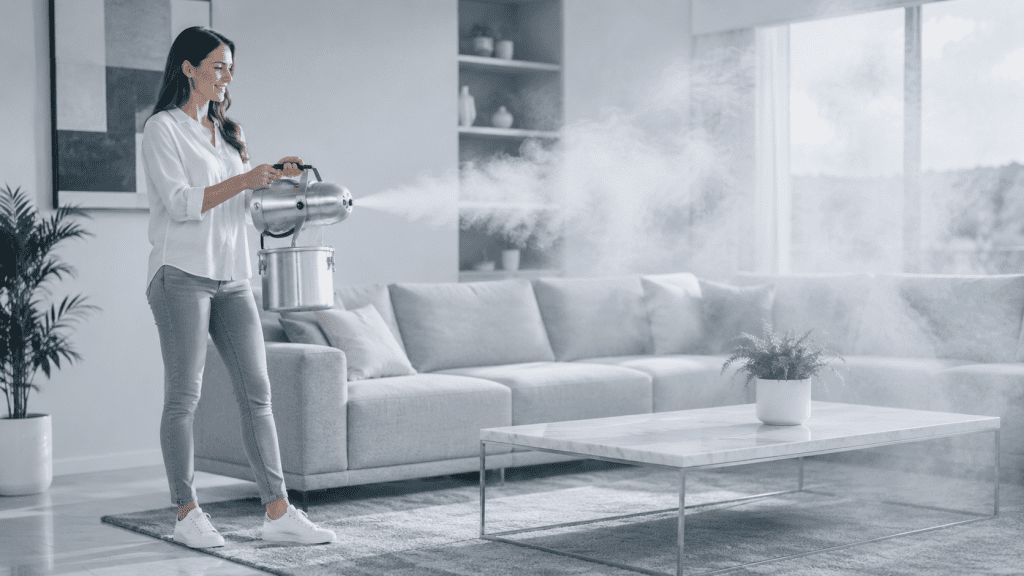
A common reaction to a mycotoxin problem is to look for a stronger product: a spray, fogger, or gas treatment that promises to handle the compounds directly. That instinct is understandable, but it is worth questioning. The goal is not just to make a chemical reaction happen. The goal is to make the indoor environment safer, cleaner, and verifiably improved.
Chlorine dioxide gas is a useful example. It has been studied as a fumigant for mold in indoor settings, so the chemistry is not baseless.
Chlorine dioxide gas is a highly reactive oxidizer that can irritate the eyes, nose, throat, and respiratory system. It requires careful handling, which already makes it very different from a simple household cleanup product.
The handling risk is not even the central problem. The more telling question is what happens to the mycotoxins after the mold itself is treated.
One peer-reviewed study found that chlorine dioxide gas inactivated mold colonies, but the mycotoxins those colonies produced remained toxic after treatment. Wilson et al., 2005
That underscores the gap at the center of this article. Treating the mold is not the same as removing the mycotoxins.
The bigger issue is the burden of proof. If a product claims to chemically change mycotoxins, it should show what the compounds were changed into, whether those byproducts are safer, whether the reaction was complete, and whether the result was verified in the actual indoor environment.
For most homes, the better starting point is not to add another reactive chemical into the space. It is to reduce the contamination itself: contaminated materials, dust, surface residues, and airborne particles. This is especially true in the homes most likely to be testing for mycotoxins, where occupants are often chemically sensitive or already dealing with the health effects of indoor exposure.
The Logical Path for How to Get Rid of Mycotoxins in Your Home
Mycotoxins are not a stain to cover up, an odor to mask, or a living organism to kill. They are chemical contaminants, and that changes the logic of cleanup. The priority is not to add another product into the home and hope the chemistry worked. The priority is to stop the conditions that created the problem, reduce the contamination that remains, and confirm the environment has improved.
That is why removal is the more defensible approach. It does not depend on unanswered claims about what a mycotoxin was changed into, whether the byproduct is safer, or whether the reaction happened evenly throughout a real indoor environment. It focuses on the places contamination may remain: affected materials, settled dust, surface residues, and airborne particles.
The order matters because each step supports the next. Moisture control helps stop the problem from continuing. Defining the scope keeps removal focused on the areas and reservoirs that actually need attention. Removal reduces the contamination that can continue affecting the indoor environment. Verification separates a home that simply looks better from one where contamination has actually been reduced.

For mycotoxins, the most logical path is not a shortcut. It is a process: stop the source, define the problem, remove the contamination, and confirm the result.
How Testing Supports Mycotoxin Removal
The AMEA air test and MESA surface test evaluate the breathing zone and targeted surfaces, the two domains most relevant to before-and-after comparison.
References
- Food and Agriculture Organization of the United Nations. (2001). Manual on the Application of the HACCP System in Mycotoxin Prevention and Control.
- Codex Alimentarius Commission. (2014). Code of Practice for the Prevention and Reduction of Mycotoxin Contamination in Cereals (CAC/RCP 51-2003).
- U.S. Environmental Protection Agency. Asbestos.
- U.S. Environmental Protection Agency. Voluntary Guidelines for Methamphetamine and Fentanyl Laboratory Cleanup.
- Agency for Toxic Substances and Disease Registry. (2005). Public Health Activities Associated with Methamphetamine Lab Cleanups.
- Pestka, J. J., Yike, I., Dearborn, D. G., Ward, M. D. W., & Harkema, J. R. (2008). Stachybotrys chartarum, trichothecene mycotoxins, and damp building-related illness. Toxicological Sciences, 104(1), 4-26.
- Wilson, S. C., Wu, C., Andriychuk, L. A., Martin, J. M., Brasel, T. L., Jumper, C. A., & Straus, D. C. (2005). Effect of chlorine dioxide gas on fungi and mycotoxins associated with sick building syndrome. Applied and Environmental Microbiology, 71(9), 5399-5403.