Introduction
Given the significant economic and health consequences of mycotoxin contamination in food crops, the importance of mycotoxin screening is widely recognized. However, the potential health consequences of mycotoxin exposure indoors and the importance of mycotoxin screening in these environments are often overlooked. By taking mycotoxin screening in the Indoor environment as seriously as we do in food & feed, we can help ensure the safety and health of individuals living and working in these environments.
In the rapidly evolving landscape of indoor environmental health, the focus on airborne mycotoxins, toxic compounds naturally produced by certain types of molds, has become increasingly important. This shift in attention is driven by a growing understanding that the presence of mycotoxins in the air we breathe poses a more direct and immediate risk to human health than mold growth on surfaces or settled dust.
While visible mold growth and dust can indicate potential problems, it is the inhalation of mycotoxins that can lead to a range of health issues, from respiratory problems to more severe, long-term conditions. Unlike surface mold that can be relatively easily spotted and cleaned, or surface dust that may contain remnants of mold and mycotoxins, the airborne are both invisible and pervasive, making them harder to detect and avoid. This underscores the need for targeted testing and remediation strategies that address not just the source of mold growth but also the mitigation of these toxic compounds in the indoor air environment.
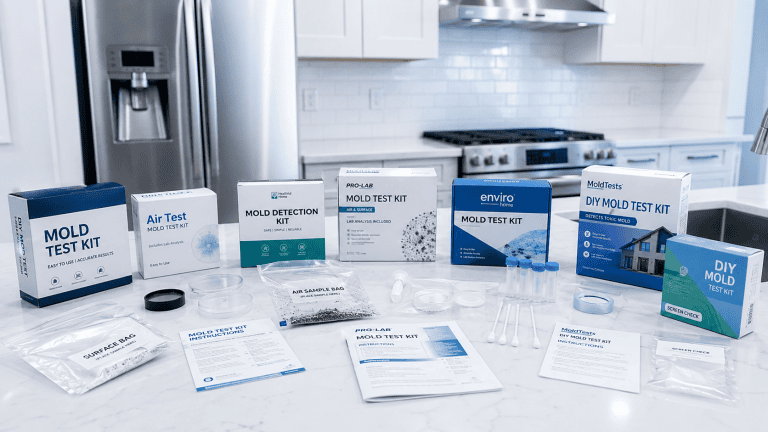
Traditional assessment methods, such as ERMI (Environmental Relative Moldiness Index), HERTSMI-2 (Health Effects Roster of Type-Specific Formers of Mycotoxins and Inflammagens-2nd Version) and EMMA (Environmental Mold and Mycotoxin Assessment) have served as important foundational and research tools in assessing the potential for mold and mycotoxin production within indoor environments. However, because all of these assessments are dust-based, they fall far short of capturing the true measure of airborne mycotoxin exposure. This gap significantly impacts both functional medicine practitioners’ ability to diagnose and treat conditions related to this exposure, and homeowners’ understanding of their living environments’ safety.
The Limitations of Dust-Based Mycotoxin Testing
While dust-based methods can offer insights into the historical presence of mold species capable of producing mycotoxins, they fail to reflect current, breathable air quality. ERMI and HERTSIMI-2 do not sample mycotoxins but look for indicator water damage molds which may produce mycotoxins. The presence of water damage molds in settled dust does not indicate mycotoxins are present or airborne. EMMA test for mycotoxins in settled dust but again this may not indicate elevated airborne mycotoxin levels. Research indicates that one cannot draw a correlation of mycotoxins levels found in settled dust to levels in the air. The assumption that settled dust accurately represents circulating mycotoxins directly contradicts the dynamic nature of indoor air, where factors such as ventilation, human activity, and environmental conditions directly influence mycotoxin dispersal and concentration. In fact, settled dust contains higher concentrations of particulates, bioaerosols and chemicals than breathable air. Homeowners and Indoor Environmental Professionals dust collection methods lack consistency leading to false positives. Sampling collection methods need to be repeatable to ensure the indoor environment is safe to occupy after mycotoxin remediation. Unfortunately, collecting settle dust methods are inconsistent and not repeatable. Without precise and consistent sample collection standards, verified reproducible results are not possible. This issue underscores an urgent need for a method that directly measures airborne mycotoxin exposure, one that can provide an accurate snapshot of the environmental risk at the time of testing which is repeatable.
Introducing AMEA™: A Paradigm Shift in Mycotoxin Detection
Mycotoxin testing can be classified into three categories; environmental, biological, and agricultural. Each testing approach aims to identify risks and help implement measures to minimize exposure to mold-produced mycotoxins. In the sections that follow, we will delve into the distinctions between these three types of mycotoxin testing categories, their specific applications, and their overall objectives. With this information, you can make an educated choice about which method of mycotoxin testing is most aligned with your specific needs to seek the appropriate solutions.
Precision and Reliability
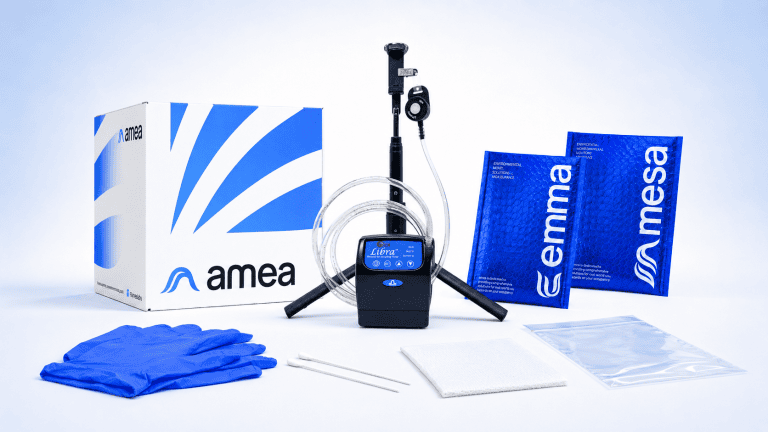
Respirare Labs AMEA test adheres to strict industry standards for air sampling, ensuring each test is conducted with precision and consistency. This standardization minimizes human error and variability in sample collection, leading to more reliable and actionable results. Employing high-quality equipment used by our certified testing providers further guarantees the accuracy of the data collected, setting a new benchmark in airborne mycotoxin testing.
AMEA is conducted using the IOM Multi-Fraction sampler which was developed by the Institute of Occupational Medicine (IOM) in Scotland. It is the gold standard sampler in the industry that meets several US & International standards for collection of inhalable particulates & bioaerosols for subsequent laboratory analysis. The IOM Multi-Fraction sampler is operated at approximately mouth-and-nose height to sample the breathed component of the air in the room. Sample collection is 2 liters a minute for 1 hour under active sampling. Active sampling is the preferred method, because it generates reproducible conditions and correctly samples the contaminants that are consistently airborne, together with the contaminants that could become airborne. Among the contaminants that are airborne and can become airborne, are the mycotoxins. Click HERE for White Paper on the use of IOM Sampler for collection of mycotoxins.
Understanding Background Levels
A unique aspect of AMEA testing is its foundation built on extensive research establishing benchmarks on average background levels of indoor airborne mycotoxins. Because those benchmarks are available, AMEA is able to provide a contextual understanding that dust-based methods lack. This enables a more accurate classification of detected mycotoxin levels and also leads to more informed decisions regarding mycotoxin remediation efforts.
Background levels have been established as a baseline from which to measure elevated levels of mycotoxins. The background levels are based upon the sampling and analysis from homes with no known history of water damage or fungal growth and occupied by non-symptomatic adults. While these levels have appeared not to be of issue for those clean homes sampled, some individuals outside of the control group have reported experiencing possible mycotoxin exposure symptoms within this range. It is important to consider these background levels to provide perspective when interpretating your results. These results should be used as a guide only and in conjunction with other tests, medical advice, or consultations with Environmental Professionals.
The Role of ELISA in Mycotoxin Detection
AMEA offers several advantages over traditional dust-based methods, such as EMMA, in detecting and quantifying airborne mycotoxins. One of these advantages is that AMEA leverages a Quantitative ELISA (enzyme-linked immunosorbent assay) technology for mycotoxin detection, utilizing antibodies that bind specifically to target mycotoxins. This specificity minimizes false positives and ensures that AMEA results correctly reflect air quality, making ELISA an essential component for accurate health investigations and effective remediation efforts.
Paired with our patented extraction method, ELISA ensures the accuracy essential for the confidence that functional medicine practitioners, who are diagnosing and treating conditions related to mycotoxin exposure, need to make certain their interventions are targeted and effective in safeguarding their patients’ health. This level of precision and reliability is crucial for making informed decisions about indoor air quality, particularly for individuals with heightened sensitivity to mycotoxins or those with compromised health.
Post-Remediation Clearance Testing
By focusing on air samples rather than settled dust, AMEA accurately reflects the mycotoxins present in the inhalable air, providing a direct measure of exposure risk. AMEA’s protocol for post-remediation clearance testing provides a repeatable, clear and standardized approach to assess indoor air quality after mold remediation. AMEA’s emphasis on post-remediation clearance testing introduces a rigorous standard for ensuring the effectiveness of mold remediation efforts. This ensures that mycotoxin levels are effectively reduced or eliminated, offering peace of mind to homeowners about their living spaces’ air quality. Dust sampling methods offer no such assurance.
In Conclusion - Embracing Innovation for Healthier Indoor Environments
Respirare Labs’ AMEA analysis represents a critical advancement in indoor environmental health, providing a much more accurate, reliable, and actionable measure of airborne mycotoxin exposure than the older dust-based assay methods could ever achieve. This innovative approach perfectly aligns with the principles of functional medicine, emphasizing the importance of environmental factors in health and addressing the need for direct measures of airborne contaminants. The transition to AMEA analysis signifies a broader movement towards embracing advanced technologies and methodologies that offer deeper insights into the environmental determinants of health.
AMEA’s implementation of ELISA for mycotoxin detection stands out as a testament to the test’s scientific rigor. This approach not only enhances the accuracy of the results but also aligns with best practices in environmental health testing, setting AMEA apart from traditional dust-based methods. The ability to accurately detect and quantify airborne mycotoxins is essential for health investigations, remediation efforts, and ultimately, for the well-being of all individuals within indoor environments.
As we continue to refine these technologies and expand our knowledge base, the potential for improving public health outcomes and enhancing the quality of indoor environments worldwide is immense. The adoption of AMEA analysis is not just a simple step forward in the area of environmental testing; it is a quantum leap toward ensuring the health and safety of people in indoor spaces all around the globe.
As awareness of the health impacts of indoor air quality continues to grow, the adoption of advanced testing methodologies like AMEA is essential for promoting healthier indoor environments. Our commitment to innovation, accuracy, and safety positions Respirare Labs at the forefront of the effort to ensure that all indoor spaces are not just habitable but truly healthful, allowing individuals to breathe easier and live better. In a world where indoor air quality directly impacts health and well-being, embracing innovative solutions like AMEA is not just a choice, it’s a necessity.
References
Mycotoxin and Health Consequences
Pfohl-Leszkowicz, A., & Manderville, R. A. (2012). Mycotoxins: Toxicological significance and the need for control measures. Food Additives & Contaminants: Part A, 29(1), 48-62. https://doi.org/10.1080/19440049.2011.619139
Indoor Air Quality and Mycotoxins
Flannigan, B., & Ridsdill-Smith, J. (2016). The relationship between indoor air quality and health: A review. Indoor Air, 26(4), 568-577. https://doi.org/10.1111/ina.12269
Traditional Assessment Methods
Haug, W. (2008). The Environmental Relative Moldiness Index (ERMI): A new tool for assessing mold exposure in indoor environments. Environmental Health Perspectives, 116(3), 325-331. https://doi.org/10.1289/ehp.10357
Airborne Mycotoxin Detection
Miller, J. D. (2008). Mycotoxins in indoor environments: A review. Journal of Environmental Quality, 37(3), 975-981. https://doi.org/10.2134/jeq2007.0194
ELISA in Mycotoxin Detection
Neme, A. (2016). Enzyme-linked immunosorbent assay (ELISA) for mycotoxin detection: Advantages and limitations. Mycotoxin Research, 32(2), 113-125. https://doi.org/10.1007/s12550-016-0260-1
Post-Remediation Testing
ACGIH. (2019). Bioaerosols: Assessment and control. American Conference of Governmental and Industrial Hygienists.
Indoor Environmental Health Innovations
Schneider, T. (2020). Advances in indoor air quality monitoring: Implications for public health. Environmental Health Perspectives, 128(4), 46001. https://doi.org/10.1289/EHP6076